
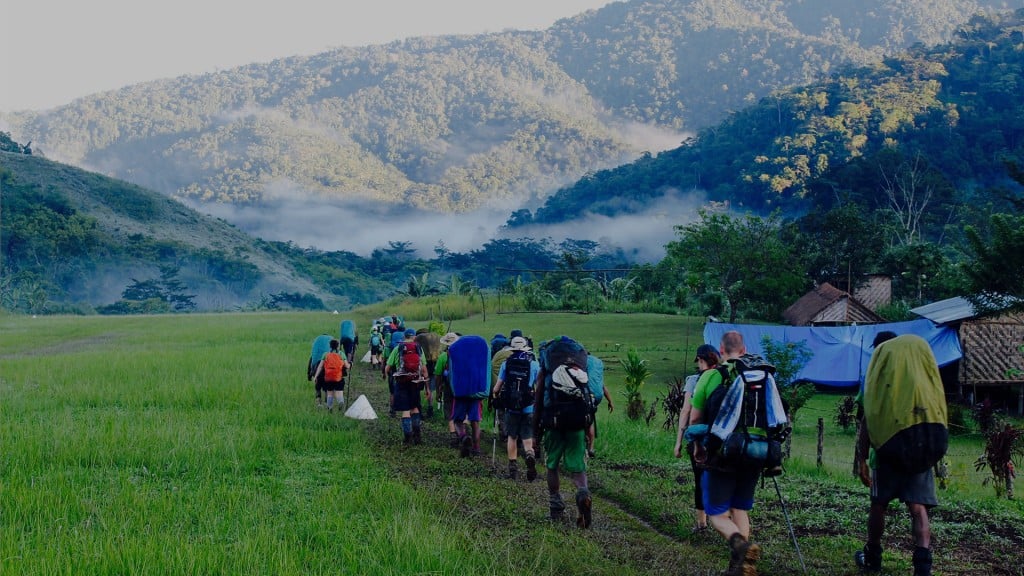
Are you putting off Kokoda because you don’t think you have the stamina, fitness or will-power to do it? Or are the stories you’ve heard about Kokoda’s unforgiving reputation holding you back?
It’s true, Kokoda is challenging, but achievable with the right preparation and mindset.
While you may assume Kokoda is only for elite athletes or ex-military, the reality is that many everyday Australians complete the trek every year. In our decades in business, we’ve had people as young as 13 and as old as 85 complete the Kokoda trek with us.
What matters most is preparation, consistency and mental strength to keep moving forward.
The truth about Kokoda fitness
Let’s be absolutely clear, Kokoda is physically demanding. As we trek, you’ll experience steep climbs, relentless descents, slippery terrain and humidity that feels like you’re walking through soup.
But successfully navigating the Kokoda track is more about endurance than speed or athleticism. Kokoda isn’t about racing to the finish. It’s about experiencing the people, villages, history and terrain along the way.
After 20 years of trekking Kokoda with small groups of all fitness levels, we’ve come to learn that consistency beats intensity and that recovery breaks are absolutely necessary.
What type of fitness actually matters?
Endurance over explosiveness
Endurance is the key to successfully trekking the Kokoda track. Long walking days can require you to be on your feet for up to 10 hours. So, training needs to build the capacity for you to walk for hours repeatedly.
Now, before you rush out and hire a personal trainer or sign up for gym-heavy programs, you need to focus on a different type of fitness.
Hiking, stair sessions and long walks will be far more useful in conditioning your body for the trek.
Leg strength and stability
Your knees, calves and quads are going to take a beating. There’s no escaping that. So, your routine needs to focus on building your leg strength. Fortunately, hiking and the stair master will do just fine.
One thing that often surprises trekkers is the descents. They are far more exhausting than uphill sections and they can hurt more than the climbs. Balance and stability will help keep these descents, as well as uneven terrain, more manageable.
Recovery capacity
You’ll be trekking for consecutive days, so sleep, hydration and nutrition become critical. As part of your preparation, it’s important to get to know when your body gets fatigued and what nutrition or rest your body needs.
Our treks are fully supported and our porters are always ready to help, which means you’re never alone if it gets too much. It also means you have an opportunity to recover rather than having to relentlessly push through. Listening to your body is a vital skill that will help you successfully trek Kokoda.
Mental resilience matters more than most expect
Kokoda is just as much a mental challenge as it is a physical one. And we can guarantee that there will be difficult moments that arise amid rain, mud, exhaustion, or discomfort. So, mindset becomes incredibly important.
Group support, alongside focusing on the small wins and steady pacing, is a key factor built into our trek to ensure you can ‘get out of your head’ and enjoy the challenges in front of you.
Do you need to be an athlete?
You do not need to be an athlete to trek the Kokoda. It’s as simple as that.
When you’re part of our group you’ll realise that most trekkers are ordinary Australians. Yes, there will be some that have done a multi-day trek before, some that have done Kokoda multiple times, but most will be just like you.
Teachers, tradies, office workers, parents, retirees, veterans, business owners, school groups. You name it, they’ve trekked it.
One past trekker explained it best:
“The track is intense and requires a reasonable level of fitness but with proper planning and training you can cope with the rigours you face. In many ways, your body conditions itself as you go along, and by day 3-4, no hill seems too insurmountable. If anything it is a mental game and the PNG boys have a saying – “Don’t look up” and “One step at a time”, and with this you can conquer anything the track can throw at you, including mud and a maze of slippery roots.”
How to start training for Kokoda
It’s important to start to build gradually and give yourself enough time. Some trekkers have gone from ‘couch to Kokoda’ in six months. Others have spent far longer preparing. The key thing is knowing where you are now and how much preparation you need.
To help ensure you are on the right track, we offer a 12-week training program that provides the structure you need, plus group training sessions available on our website.
Your training should include walking, hills, stairs, loaded-pack training, and, of course, recovery. What’s more important is that you are consistent. We are also available to discuss pre-trek training habits and guidance, so always feel free to reach out to us directly.
We recommend familiarising yourself with our itinerary, so you can understand the structure, rhythm and pace of our Kokoda trek. But also bear in mind, that our porters, our team and your fellow trekkers are there to support you every step of the way.
https://getawaytrekking.com.au/tour/papua-new-guinea/kokoda-track-trek/